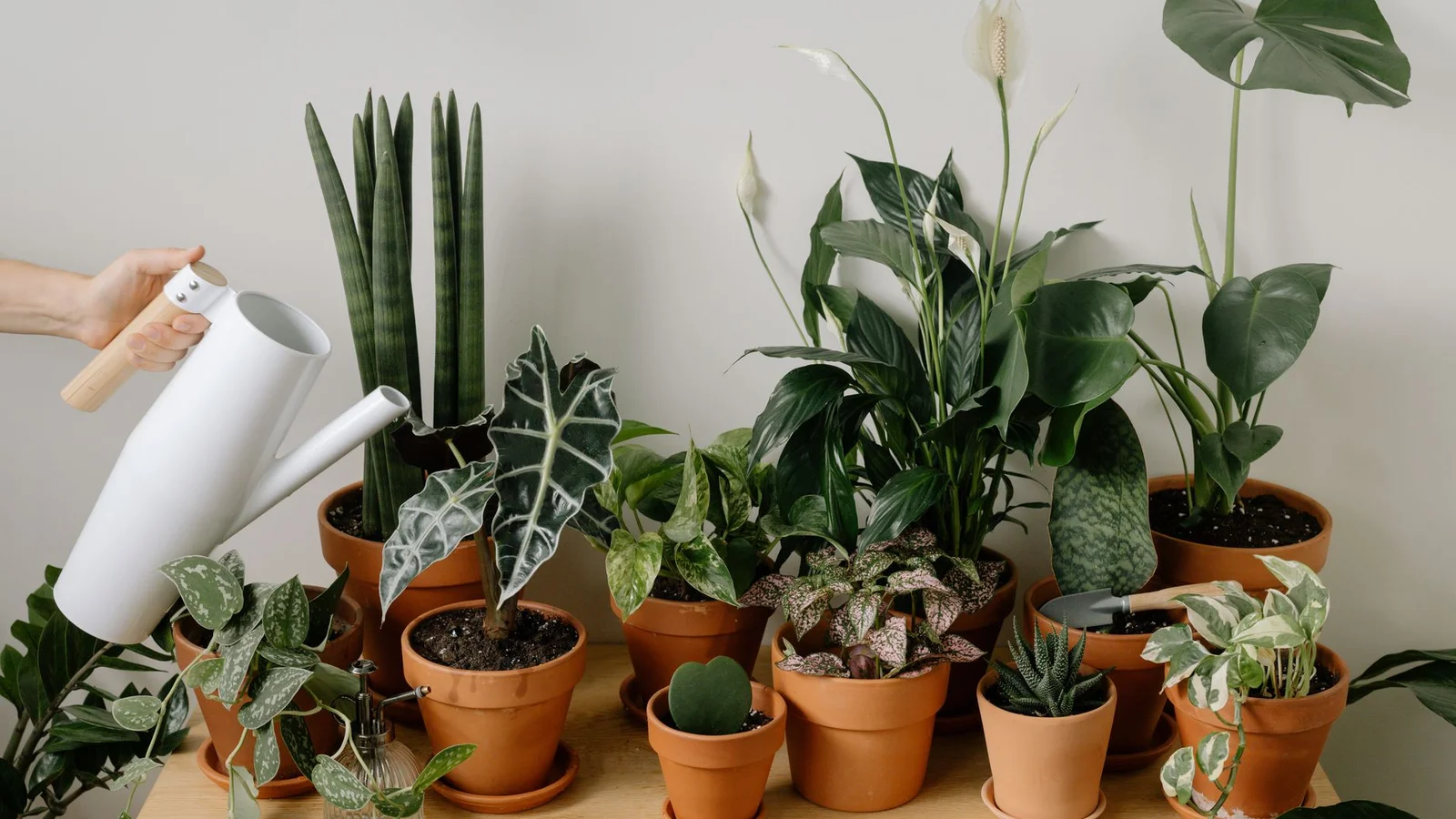
How to Water Houseplants the Right Way: Overwatering, Underwatering, and Getting It Just Right
If you’ve killed a houseplant, chances are watering was the culprit. Not because you forgot about it or didn’t care enough — but because “water it once a week” advice ignores the dozens of little variables that actually determine how thirsty a plant is on any given day. Pot size, light levels, humidity, the season, the type of soil, even the material your pot is made from all change how fast a plant dries out. The good news is that once you understand what your plant is actually asking for, watering stops being a guessing game and becomes second nature. Here’s how to get it right, plant by plant, season by season.
Why “Water Once a Week” Doesn’t Work
Most houseplant deaths blamed on “bad luck” or “brown thumbs” are really just watering on a fixed schedule instead of watering based on what the plant and soil are telling you. A pothos in a small terracotta pot on a sunny windowsill might need water twice a week in summer. The same plant in a glazed ceramic pot in a dim corner might go three weeks between drinks. Schedules are a starting point at best — the plant’s actual condition should always override the calendar.
How to Tell When a Plant Actually Needs Water
The Finger Test
This is the single most reliable, lowest-tech tool you have. Stick your index finger into the soil up to the second knuckle (about 2 inches). If it feels dry at that depth, it’s time to water. If you feel any moisture clinging to your skin, wait. Most tropical houseplants want the top 1-2 inches to dry out between waterings; succulents and cacti want the soil to dry out much further down, often the whole pot.
The Weight Test
Once you’ve watered a plant thoroughly and felt how heavy the pot is, you have a baseline. As the soil dries, the pot gets noticeably lighter. Lift your pots regularly and you’ll start to recognize “needs water” heaviness versus “just watered” heaviness without even touching the soil. This is especially useful for plants in pots too deep for the finger test to reach the root zone.
Moisture Meters
A cheap soil moisture meter (the probe kind with a dial reading dry/moist/wet) can take some of the guesswork out, especially for beginners or for plants in large pots where your finger can’t reach far enough down. Push the probe close to the roots, not just near the surface, for an accurate reading. Meters aren’t perfect — mineral buildup in soil can throw off readings over time — but they’re a helpful second opinion while you’re building confidence.
Other Visual Cues
- Soil color: Dry potting mix is noticeably lighter and paler than moist mix, which looks darker and richer.
- Pot condition: Terracotta pots turn a lighter, chalky color when the soil inside has dried out.
- Leaf feel and posture: Some plants, like peace lilies and calatheas, droop dramatically when thirsty and perk back up within hours of watering — a useful, if slightly stressful, built-in signal.
Signs of Overwatering vs. Underwatering
Here’s where a lot of plant owners get tripped up: overwatered and underwatered plants can look surprisingly similar at first glance — both often show yellowing or wilting leaves. The details matter.
Overwatering Symptoms
- Yellow leaves that feel soft, mushy, or translucent rather than crispy
- Soil that stays wet or soggy for days after watering
- A sour, swampy smell coming from the pot
- Dark, mushy stems at the soil line
- Roots that are brown or black and mushy when you check them (rather than firm and white or tan) — a sign of root rot
- Fungus gnats hovering around the soil surface
- Leaves dropping suddenly while still green or only lightly yellowed
Underwatering Symptoms
- Leaves that are dry, crispy, or crunchy, often starting at the edges or tips
- Soil pulling away from the sides of the pot
- Leaves that droop or curl but perk back up quickly once watered
- Slow, stunted growth
- Lower leaves yellowing and dropping while the soil is bone dry
When in doubt, check the roots. Overwatering is far more likely to be fatal than underwatering, because most houseplants recover from a missed week of water much faster than they recover from rotted roots. If you’re torn between the two, it’s almost always safer to wait another day or two before watering.
Watering Technique: Top Watering vs. Bottom Watering
Top Watering
This is the standard method: pour water evenly over the soil surface until it runs freely out the drainage holes. Top watering flushes excess mineral salts (from tap water and fertilizer) out of the pot over time, which is a real benefit — those salts can build up and burn roots if they’re never rinsed away. Water slowly and in a circle around the base of the plant rather than dumping it all in one spot, so the whole root ball gets evenly saturated.
Bottom Watering
Set the pot in a saucer or basin of water and let it soak up moisture through the drainage holes for 15-30 minutes, then remove it and let it drain fully. Bottom watering encourages roots to grow downward in search of moisture, and it’s gentler on plants prone to crown or stem rot, like African violets, since the leaves and stem base never get wet. The tradeoff is that it doesn’t flush out mineral buildup, so plants that are bottom-watered exclusively benefit from an occasional thorough top-watering flush every month or two to rinse accumulated salts out.
Whichever method you use, always let excess water drain away completely and never let a pot sit in standing water for more than half an hour. A pot sitting permanently in a full saucer is one of the most common causes of root rot.
Water Type and Temperature
For the vast majority of houseplants, ordinary tap water is perfectly fine. A small number of plants are sensitive to the chlorine, fluoride, and dissolved minerals in tap water and will show brown leaf-tip burn over time — calatheas, prayer plants, dracaenas, and spider plants are the most commonly cited examples. If you notice this kind of tip burn and suspect your water, try:
- Letting tap water sit out uncovered for 24 hours so chlorine can dissipate (this doesn’t remove fluoride or dissolved salts)
- Using filtered or distilled water
- Collecting rainwater when possible, which most houseplants love
Temperature matters more than people expect. Always use room-temperature water. Cold water straight from the tap can shock tropical roots and stunt growth, while very hot water can damage them outright. If your tap runs cold, let it sit out for a bit or add a splash of warm water to take the chill off before pouring.
Drainage Is Non-Negotiable
No watering technique can compensate for a pot without drainage holes. Without a way for excess water to escape, water pools at the bottom of the pot, the roots sitting in it suffocate from lack of oxygen, and rot sets in even if you’re being careful about how much you pour. If you love a decorative pot that has no drainage hole, use it as a cachepot: keep the plant in its plastic nursery pot (with drainage) and simply set that pot inside the decorative one, removing it to drain in a sink after each watering.
Potting mix matters too. A dense, moisture-retentive mix (or worse, garden soil) will stay wet far longer than a well-aerated houseplant mix with perlite, bark, or coarse sand mixed in. If your plant seems to stay wet forever no matter how little you water, the mix itself may be the problem, and repotting into a chunkier, faster-draining blend can solve chronic overwatering issues on its own.
Adjusting for the Seasons
Watering needs shift throughout the year, and this is one of the most common places beginners go wrong — they keep watering at their summer rate straight through winter.
- Spring and summer: Longer days, more light, and active growth mean plants use water faster. This is when most houseplants need the most frequent watering.
- Fall and winter: Shorter days and lower light levels slow growth way down for most houseplants, so they use much less water. Indoor heating also dries the air, which can be confusing — the air feels dry, but the soil is often still wet from the last watering because the plant simply isn’t drinking as much. Cut back your watering frequency significantly and rely on the finger test rather than habit.
It’s common for a plant that needed water every 5 days in July to only need it every 2-3 weeks in January. Always check before you pour rather than assuming last month’s schedule still applies.
Different Plants, Different Needs
Succulents and Cacti
These plants store water in their leaves and stems and are adapted to survive long dry spells, so they want a “soak and dry” approach: water thoroughly until it runs out the drainage holes, then let the soil dry out completely — not just the top inch, but all the way through the pot — before watering again. This might mean once every 2-3 weeks in summer and once a month or less in winter. Overwatering is by far the number one killer of succulents and cacti; err on the side of too little.
Tropical Foliage Plants
Pothos, philodendrons, monsteras, and similar tropicals generally like the top 1-2 inches of soil to dry out between waterings but don’t want to dry out completely for extended periods. They come from environments with regular rainfall and consistent humidity, so consistency matters more than either drenching or drought.
Ferns
Ferns are the outlier that wants consistently moist (not soggy) soil at all times. Their fine, shallow root systems dry out and die back quickly, and crispy fern fronds rarely recover the way other plants’ leaves do. Check ferns more frequently than other houseplants, and consider grouping them with a humidity tray or in a naturally humid room like a bathroom, since dry air stresses them as much as dry soil does.
Plants with Thick, Fleshy Roots or Rhizomes
Plants like ZZ plants and some aroids store water in underground rhizomes or tubers, giving them succulent-like drought tolerance despite having lush, tropical-looking leaves. Treat these more like succulents — let them dry out substantially between waterings — even though they don’t look like desert plants.
The Bottom Line
There’s no single number of days that works for every plant, every pot, and every home. The real skill in watering houseplants isn’t memorizing a schedule — it’s learning to read the plant and soil in front of you: finger test the soil, notice how the pot feels, watch how the leaves behave, and adjust as the seasons change. Get those habits in place and you’ll find that watering stops being the anxious guessing game it once was, and becomes one of the most satisfying, meditative parts of keeping plants.