How to Get Rid of Fungus Gnats in Houseplants for Good
If you’ve ever noticed tiny black flies weaving lazy loops around your houseplants or bursting into the air the moment you water, you’ve met fungus gnats. They’re more of an annoyance than a serious threat in small numbers, but left unchecked they can multiply fast, stress out your plants’ roots, and turn every watering session into an impromptu bug hunt. The good news is that fungus gnats have a very specific weakness — they depend entirely on consistently moist soil to complete their life cycle — which means the fix is less about killing every adult fly you see and more about making your soil an inhospitable place for the next generation to grow up in.
What Fungus Gnats Actually Are
Fungus gnats are small, dark, mosquito-like flies, usually only a few millimeters long, that live in the top layer of damp potting soil. Adults are mostly harmless to plants and mainly a household nuisance, fluttering around when disturbed and occasionally showing up near windows or lights. The real damage, if any, comes from the larvae: tiny, translucent worm-like larvae that live in the soil and feed on organic matter, fungi, and sometimes tender young roots. In a healthy, well-established plant, larvae feeding on roots is rarely serious, but in seedlings, cuttings, or already-stressed plants, root damage from a heavy infestation can slow growth and contribute to wilting.
Why They Showed Up in the First Place
Fungus gnats need consistently moist organic material to breed, so their presence is almost always a sign that soil is staying wet longer than it should between waterings. Common contributing factors include watering on a fixed schedule rather than checking whether the soil actually needs it, pots without adequate drainage, potting mixes that are heavy on peat or compost and slow to dry, and saucers that collect standing water beneath the pot. New plants can also bring gnat eggs or larvae home in their existing soil, which is one reason a freshly purchased plant may seem to spawn gnats within a couple of weeks even if you haven’t overwatered it.
Step One: Let the Soil Dry Out
This is the single most effective thing you can do, because it breaks the gnat life cycle at its foundation. Fungus gnat eggs and larvae need moist soil to survive, so allowing the top one to two inches of soil to dry out completely between waterings will kill off a large portion of the population within a couple of weeks without any product at all. For most established houseplants, this means watering less frequently than you might be used to and always checking with a finger before adding more. If a plant genuinely needs consistent moisture and can’t tolerate drying out, you’ll need to lean more heavily on the other methods below.
Step Two: Use Sticky Traps to Catch Adults
Yellow sticky traps, either store-bought or homemade from a bright yellow card coated in a thin layer of petroleum jelly, attract and catch adult gnats before they can lay more eggs. Place a few traps horizontally just above the soil surface across your affected plants. While traps won’t solve an infestation on their own since they don’t touch the larvae in the soil, they’re an excellent way to monitor how bad the problem actually is and to track whether your other efforts are working — fewer gnats stuck to the trap each week is a good sign you’re winning.
Step Three: Apply a Bti Product to the Soil
Bacillus thuringiensis israelensis, usually sold as “mosquito bits” or a similar larvicide, is a naturally occurring bacteria that specifically targets fly and mosquito larvae without harming plants, pets, or beneficial insects. Soak the mosquito bits in water according to the package directions to create a “tea,” then use that water to water your affected plants for the next few applications. This gets the bacteria directly into the soil where the larvae live and feed, killing them before they mature into breeding adults. Repeat every week or two for about a month to catch multiple generations, since eggs already laid before treatment will keep hatching for a while.
Step Four: Try a Soil Drench of Hydrogen Peroxide
A diluted hydrogen peroxide drench — a common ratio is one part standard 3% hydrogen peroxide to four parts water — poured into the soil until it runs from the drainage holes will kill larvae and eggs on contact through oxidation, fizzing visibly as it works. It’s a fast, low-cost option for a bad infestation, though it should be used sparingly since it can also disrupt some of the beneficial microbes in healthy soil if overused. This works well as an occasional reset rather than a routine watering habit.
Step Five: Add a Layer of Sand or Diatomaceous Earth
Covering the top of the soil with a half-inch layer of coarse sand, fine gravel, or diatomaceous earth creates a dry, inhospitable barrier that makes it difficult for adult gnats to lay eggs in the soil and for larvae to reach the surface to emerge as adults. This is a nice low-maintenance, long-term addition once you’ve knocked back an active infestation, since it also helps the very top layer of soil dry faster and stay less attractive to future gnats.
Preventing a Repeat Infestation
- Water based on soil dryness, not a fixed calendar. Check with a finger or a moisture meter before every watering rather than watering on autopilot.
- Empty saucers after watering so standing water doesn’t sit under the pot and keep the bottom layer of soil perpetually damp.
- Quarantine new plants for a week or two before placing them near your existing collection, giving you a chance to spot and treat any hitchhiking gnats before they spread.
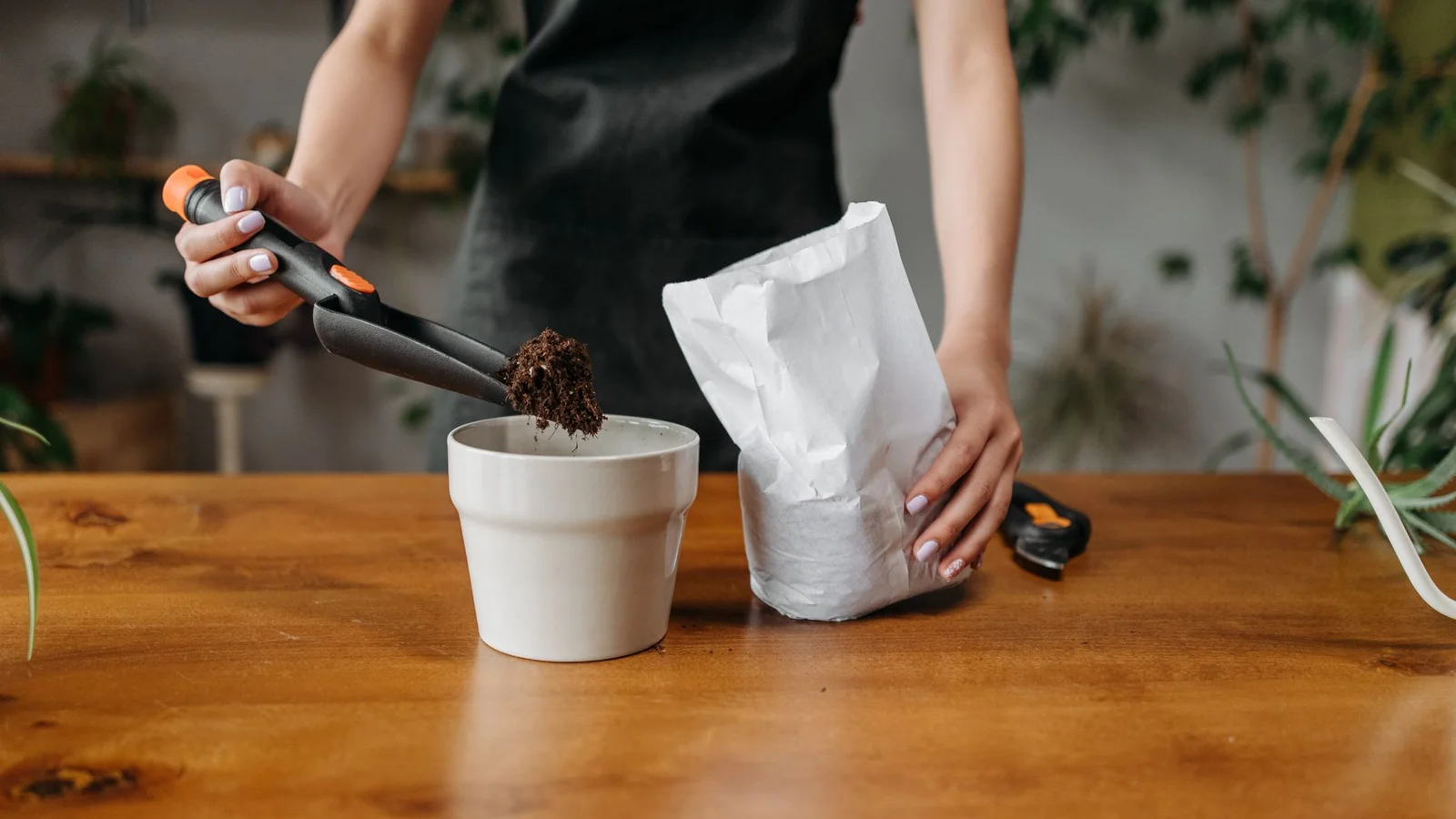
- Choose a well-draining potting mix for gnat-prone plants, since chunkier mixes that dry faster are naturally less hospitable to larvae.
- Remove decaying plant debris like fallen leaves or old flowers from the soil surface promptly, since decomposing organic matter is exactly what fungus gnat larvae feed on.
How Long It Takes to See Results
Because fungus gnats have a life cycle of roughly three to four weeks from egg to breeding adult, don’t expect an instant fix even if you do everything right. Combining a couple of methods — letting soil dry out more, using sticky traps to monitor and reduce the adult population, and treating with a Bti drench every week or two — typically clears a moderate infestation within about a month. If gnats persist well beyond that despite consistent effort, double-check that every plant in the vicinity is being treated, since gnats will happily migrate from one damp pot to the next and undo your progress on the others.
Fungus gnats are unpleasant but rarely dangerous, and they respond well to a straightforward, patient strategy built around drier soil and interrupting their breeding cycle. Stay consistent for a few weeks, and your plants — and your peace of mind while watering — will be gnat-free before long.
When to Consider More Drastic Measures
If a single plant is severely infested and none of the gentler methods have made a dent after a full month, a full repot can act as a hard reset. Remove as much of the old, gnat-infested soil from the roots as you comfortably can, rinse the root ball under lukewarm water to dislodge any remaining eggs or larvae, and replant into a fresh, well-draining mix in a clean pot. This is more disruptive to the plant than the treatments above, so save it for cases where an infestation is genuinely out of control or the plant’s roots already show signs of damage, rather than reaching for it as a first response.